Building a Fence for a Horse Riding Arena


For our new horse riding market we chose to be able to build a complete perimeter fence. This is consisting of wood posts and boards that could match our out buildings in addition to horse sheds. Many of us used 8 in . posts, and a couple of x 6 boards 16 feet very long. Our posts have been spaced 8 foot apart, this enabled us to secure each 2 x 6 board to three posts. This was to reduce typically the chance with the a couple of x 6 panels warping and rotating, as well as the fence stronger. The position of all the posts, which include gateways were secured out prior to constructing the market fence. Our market will be 200 by 100 feet, with a 12 foot gate each and every conclusion. We began by simply tying a thread to a part stake and pulling it 200 toes to the following corner stake in the long side of the area. After pulling the particular string tight in order to ensure that it absolutely was a perfectly straight-line, we tied that tightly to typically the second stake. The stake for every single post was then located along the thread line at eight foot intervals to complete the first aspect in our perimeter fencing.
To layout the second side associated with our riding industry fence we tested 100 feet in the corner stake and put a stake inside the ground for the particular next corner. To be able to make sure of which the corners happen to be perfect 90� aspects. We could used a construction calculator to do the math. Instead all of us made our personal ninety days degree angle with, a known math solution, the older tried and tested method involving the 3, 4, 5 right-triangle solution. A triangle which includes three sides in which one is three or more feet long, another is 4 foot and the third calf is 5 ft long creates a new right triangle. Typically the intersection from the three or more foot and 4 foot leg make a perfect 90 degree angle. Any interminables of these dimensions work; 6, 6, 10 or twelve, 16, and 20 are also combinations of which yield an excellent 90 degree angle. To make our corner, we employed a measurement regarding 100 feet to be able to the next corner, 75 feet down again our staked boundary line, and a hundred twenty five feet for each of our diagonal measurement. Exactly where the 100 ft . measurement, and the a hundred twenty five foot measurement intersected we placed our own next corner risk. After pulling some sort of string to make sure regarding a straight-line, we all placed 11 pegs at 8 feet intervals along the string. This produced a total distance involving 88 feet. The remaining 12 feet is where each of our gate went. We chose to use a 12 foot gate at each finish of our area for two factors. First this is definitely a good-sized opening for getting equipment in the arena to be able to maintain the using surface. And secondly, 12 feet offered us a level measurement for our 8 foot post intervals on the hundred foot side associated with the arena.
In order to layout and stake the third side of our arena perimeter fence, all of us measured 200 foot and placed the particular last corner position, taking care to obtain perfect 90� sides on our sides making use of the 3, four, 5 right-triangle option. After pulling some sort of straight string series we placed our post stakes each 8 feet doing the layout of the third side. We laid out the particular last side of the arena together with 11 stakes spread 8 feet aside for the discussions and another 10 foot opening for a gate.
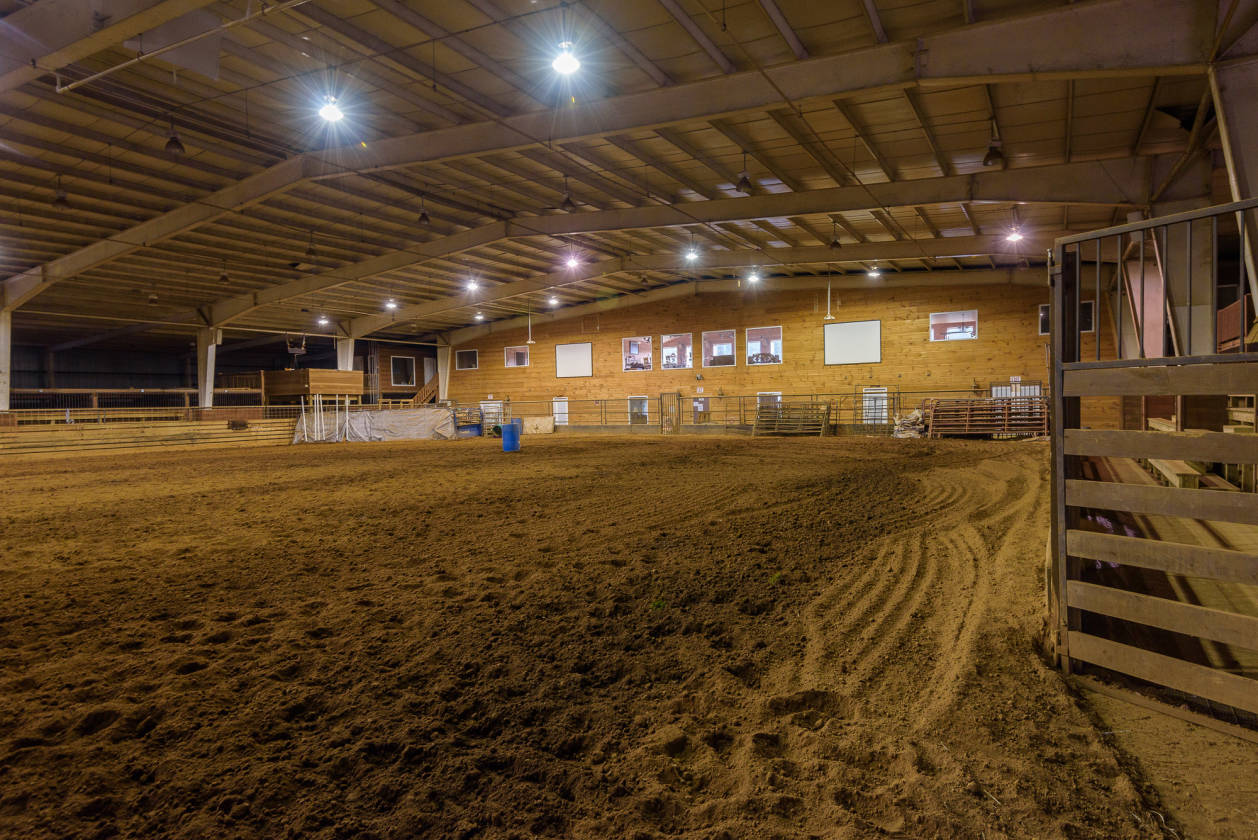
Right after all of the perimeter post jobs have been staked, all of us used a write-up hole digger on a machine to be able to drill the openings in the terrain for our discussions. Our posts have been 8 feet very long, and our holes were drilled a couple of feet deep, thus that we might possess 6 feet associated with post protruding associated with the ground any time finished. We applied a string line and level to be sure all of our posts were directly and uniform prior to tamping and tearing the ground surrounding them for compaction.
If all of the perimeter posts got been tamped into place, we in that case began fastening each of our 2 x six boards to typically the posts for the railings. We decided to go with to use a couple of railings one from 30 inches for the top, and one other at 60 inches to the leading of railing. Prior to fastening the hand rails for the posts, many of us pulled a line line tightly straight down the row of posts at 30 inches high in addition to made a tag on each article were the top rated of the base railing will get, we also manufactured another mark at 60 inches for the top of the top rated rail. Next all of us used clamps to be able to clamp our 2 x 6 railing to the posts taking care to lines up with the mark, we acquired made previously. The particular railings is going to be connected to the content using 5/16 simply by 3 inch very long lag bolts which has a large flat washing machine. To do this specific, we first drilled two holes slightly smaller than 5/16 through the railing and into the post. We chose to use 2 bolts to batten our railings to each post, as a result the two bolt holes were drilled in the hand rails 1/2 inches coming from the edge of the 2 x 6. We would not want our sl? heads to protrude out of typically the railing, so we drilled the two holes in the railing slightly larger compared to the washer 1/2" deep to countersink the washer and head with the separation bolt. After placing click here into the holes plus tightening them upwards, the clamps had been then removed along with the process was repeated for the following railing.
After fixing all of typically the railings to the particular posts, we next hung the two twelve foot gates in each end of our own riding arena. We all purchased two metal gate kits that came with hinges plus a latch on them looking forward to installation. To hang the gates was an easy matter of drilling two holes by way of the gateposts at the correct level. The final action to completing each of our riding arena had been to paint all the wood railings in addition to posts with some sort of good outdoor safety paint that could maintain and protect typically the wood, in addition to coordinating the color on this existing horse storage sheds.